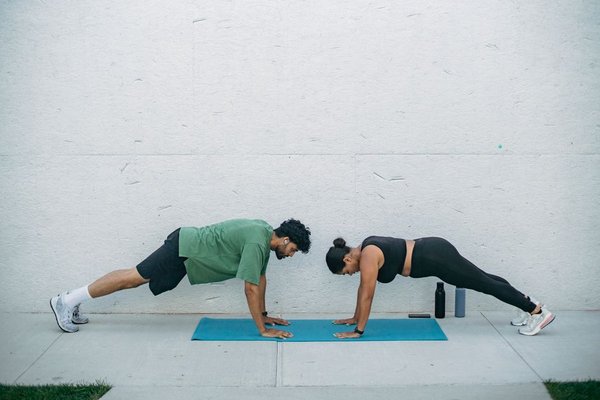
You do not need dumbbells, a gym membership, or the ability to do a perfect push-up to start getting stronger. A bodyweight workout for beginners can begin with a little floor space and movements you can control. The trick is choosing exercises that feel manageable today but have room to grow.
This plan trains your legs, chest, shoulders, back, and core without turning your first session into an endurance test. You will learn the movements, put them into a repeatable routine, and know when to make each one harder.
Start With Control, Not Maximum Repetitions
Bodyweight exercises use your own weight as resistance. That makes beginner calisthenics approachable, but not automatically easy. A floor push-up, for example, can be demanding even for someone who walks regularly.
Choose variations that let you move smoothly and finish each set feeling you could perform another two or three good repetitions. Begin with a five-minute warm-up: march in place, circle your shoulders, rotate your hips, and practise shallow squats. Stop or modify anything that causes sharp pain.
Seven Simple Moves for Your First Home Workout
1. Bodyweight Squat: Legs and Hips
Stand with feet about shoulder-width apart. Bend at your hips and knees as though sitting into a chair, then push through your feet to stand. Keep your heels grounded and knees moving in line with your toes. Start with six to ten repetitions. If depth is difficult, squat only as low as you can control, or use a sturdy chair as a target.
2. Wall Push-Up: Chest, Shoulders, and Arms
Place your palms on a wall slightly wider than your shoulders. Walk your feet back, keep your body straight, and bend your elbows to bring your chest toward the wall. Push away without letting your hips sag. Aim for six to ten repetitions. Later, use a sturdy kitchen counter for a more challenging angle before attempting floor push-ups.
3. Reverse Lunge: Single-Leg Strength
Step one foot backward, lower a comfortable distance, then return to standing. Keep your front foot flat and torso tall. Perform five to eight repetitions on each side. Hold a wall lightly for balance if necessary. If lunges bother your knees, practise supported split-stance bends within a pain-free range.
4. Glute Bridge: Glutes and Posterior Chain
Lie on your back with knees bent and feet flat. Press through your feet and lift your hips until your shoulders, hips, and knees form a gentle line. Pause, then lower with control for eight to twelve repetitions. Avoid arching your lower back for extra height. This complements squats by emphasising hip extension.
5. Prone W Raise: Upper-Back Control
Lie face down with your elbows bent so your arms resemble a W. Draw your shoulder blades back gently and lift your hands and arms a little while keeping your neck relaxed. Lower slowly for eight repetitions. This practises upper-back positioning, although it cannot replace a progressively loaded pulling exercise such as a row.
6. Bird Dog: Core Stability
Begin on hands and knees. Reach your right arm forward and left leg backward without twisting your hips or arching your spine. Pause for a breath, return, and switch sides. Try six repetitions per side. Shorten your reach if you wobble. A steady trunk matters more than lifting your limbs high.
7. Forearm Plank: Abdominal Endurance
Rest on your forearms and toes, keeping your ribs and pelvis controlled rather than letting your lower back dip. Hold for ten to twenty seconds while breathing. Keep your knees on the floor to make it easier. End the hold when your form changes; a short steady plank beats a long strained one.
Your Practical 20-Minute No Equipment Workout
For your first session, complete one round of all seven exercises in the order above. Rest 30 to 60 seconds between movements, or longer as needed. After a few sessions, work toward two rounds. Depending on rest and pace, the workout may take around 15 to 25 minutes including your warm-up.
Try training on Monday and Thursday, with walking or other comfortable activity between sessions. That allows recovery while you build the habit. US physical activity guidance recommends muscle-strengthening activity on at least two days weekly, alongside regular aerobic activity. This routine addresses strength, not the entire aerobic recommendation.
On a hectic morning, try one round of squats, wall push-ups, glute bridges, bird dogs, and plank. A ten-minute session you actually repeat is more useful than an elaborate plan you abandon.
How to Progress Without Buying Equipment
Track the variation and controlled repetitions you complete. When you reach the top of the suggested range across two rounds with good form, change just one thing: add a repetition, slow the lowering phase, extend a hold, or select a harder variation.
For example, progress from wall to counter push-ups and eventually floor push-ups. A squat can become a slower squat or supported split squat. These gradual changes make at home strength training productive without making every workout exhausting.
Eventually, your back will need more resistance than prone raises provide. A band or safely anchored rowing setup can introduce genuine pulling work when you are ready. For now, coordination and consistency are worthwhile goals.
Common Mistakes That Slow Beginners Down
Do not race through repetitions just to feel tired. Let technique set the pace. Avoid holding your breath, training through joint pain, or pushing every set to failure. Mild soreness after unfamiliar exercise can occur; persistent or worsening pain deserves attention.
Repeat this routine for several weeks rather than switching exercises constantly. If you have a medical condition, are recovering from injury, or are unsure which moves are suitable, ask a qualified health professional for individual advice.
Frequently Asked Questions
Can beginners build muscle with bodyweight exercises?
Yes. Muscles can adapt to challenging bodyweight movements, particularly when you increase difficulty gradually. Results depend on effort, recovery, nutrition, and individual factors. Advanced strength goals may eventually require more resistance.
How many days a week should I do this workout?
Two nonconsecutive days are a practical starting point. Add a third if you recover well and want more practice. You do not need to train the same muscles hard every day.
What if I cannot do a push-up or lunge yet?
Use the easiest variation you can control. Wall push-ups and supported, shallow lunges count. Strength develops through manageable practice, not forcing the hardest version on day one.
Is this workout enough for general fitness?
It builds a strength foundation, but complete fitness includes aerobic activity and everyday movement. Pair your sessions with walks or something else you enjoy, increasing your activity gradually.
Build the Habit Before Chasing Harder Moves
Your first bodyweight workout does not have to look impressive. Learn the movements, practise regularly, and notice when yesterday’s difficult repetition becomes easier. That is your cue to progress. Once these basics feel reliable, a more challenging full-body home routine becomes a natural next step.