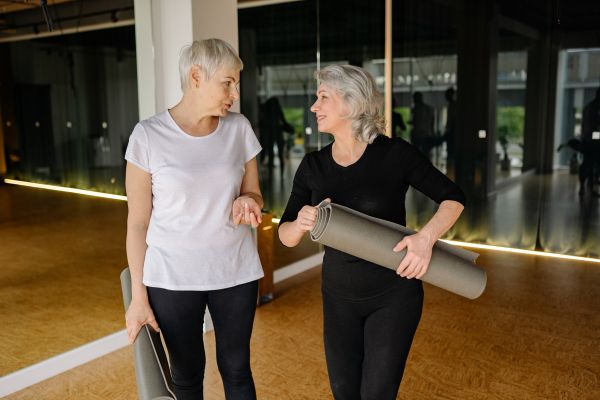
Why Gentle Movement Matters More With Age
Low-impact workouts for seniors are not about doing less. They are about moving wisely. As the body ages, joints may feel stiffer, balance can change, and recovery may take a little longer than it once did. That does not mean exercise should disappear from daily life. In fact, regular movement becomes even more important because it helps protect strength, mobility, independence, and confidence.
Low-impact exercise simply means movement that places less stress on the joints. Instead of jumping, pounding, or quick twisting, it uses smoother, steadier patterns. Walking, water aerobics, cycling, chair exercises, tai chi, and gentle strength training all fit beautifully into this category.
The goal is not to chase exhaustion. It is to build a body that feels more capable during ordinary life: climbing stairs, carrying groceries, getting out of a chair, gardening, playing with grandchildren, or taking a peaceful walk without fear of losing balance.
Understanding What Seniors Need From Exercise
A good fitness routine for older adults usually includes three main parts: aerobic movement, strength training, and balance work. The CDC recommends that adults 65 and older aim for weekly aerobic activity, muscle-strengthening exercise, and balance-focused movement as ability allows. That sounds formal, but in real life it can be simple.
Aerobic exercise keeps the heart and lungs working. Strength training helps protect muscles and bones. Balance practice reduces the risk of falls and makes movement feel steadier. Flexibility work, while sometimes treated as an extra, can also make daily tasks more comfortable.
The National Institute on Aging also highlights aerobic, muscle-strengthening, and balance exercises as important parts of healthy aging. The beauty of low-impact fitness is that these pieces can be combined gently, without turning exercise into something intimidating.
Walking as the Most Natural Starting Point
Walking remains one of the best low-impact workouts for seniors because it is familiar, affordable, and easy to adjust. A short walk around the block can be enough for someone restarting after a long break. For someone already active, a brisk walk through a park may provide a satisfying cardiovascular workout.
The pace matters less than consistency at first. A senior who walks ten minutes most days may gain more long-term benefit than someone who attempts one exhausting session and gives up. Over time, walking can become slightly longer, slightly faster, or more varied by adding gentle hills or different routes.
Good shoes make a real difference. So does choosing safe surfaces, avoiding extreme heat, and using a walking stick or companion when balance feels uncertain. Walking should leave the body warmed and awake, not shaky or breathless in a worrying way.
Water Workouts for Joint-Friendly Strength
Water exercise is especially kind to sore knees, hips, and backs. The buoyancy of water reduces pressure on the joints, while the natural resistance helps muscles work. This makes swimming, water walking, and water aerobics excellent options for seniors who want a full-body workout without harsh impact.
A person does not need to be a strong swimmer to benefit. Walking across the shallow end of a pool, lifting the knees gently, or moving the arms through the water can all improve circulation and strength. Many people also find that movement feels freer in water, especially if arthritis or stiffness makes land exercise uncomfortable.
Water workouts are also social when done in a group class. That small human element matters. Exercise becomes easier to continue when it feels like part of life rather than a lonely task.
Chair Exercises for Safety and Confidence
Chair workouts are often underestimated. They can be useful for seniors with limited mobility, beginners, people recovering from illness, or anyone who feels nervous about standing exercises. A sturdy chair can support seated marches, arm raises, ankle circles, gentle twists, and sit-to-stand movements.
The sit-to-stand exercise is particularly practical because it trains a movement used every day. Rising from a chair strengthens the thighs, hips, and core. Done slowly and safely, it can build real functional strength.
Chair exercise also removes one of the biggest barriers to fitness: fear. When someone knows they can move safely, they are more likely to begin. And beginning is often the hardest part.
Strength Training Without Heavy Weights
Strength training does not have to mean lifting heavy dumbbells in a gym. For seniors, strength can be built with body weight, resistance bands, light hand weights, or even household items. Wall push-ups, heel raises, seated leg lifts, and gentle band rows can all help preserve muscle.
This matters because muscle naturally declines with age if it is not used. Less muscle can make daily activities harder and may increase fall risk. Strength work helps the body stay useful, steady, and resilient.
The key is control. Movements should be slow enough to feel deliberate. Breathing should continue normally. Pain is a warning sign, not a badge of effort. A mild challenge is fine; sharp discomfort is not.
Balance Training for Everyday Independence
Balance training may not look dramatic, but it can be life-changing. Falls are a major concern for older adults, and improving balance can help reduce that risk. Simple practices such as standing near a counter while shifting weight from one foot to the other can be a safe place to begin.
Tai chi is another excellent low-impact option. Its slow, flowing movements train balance, coordination, posture, and breathing. Yoga can also help, especially when adapted for older adults with chair support or gentle poses.
Balance work should always be done with safety nearby. A wall, counter, chair, or trained instructor can provide support. Confidence grows slowly, and that is perfectly fine.
Stretching to Keep Movement Comfortable
Flexibility helps the body move with less stiffness. Gentle stretching after a walk or warm shower can feel especially good because the muscles are already warm. Seniors may benefit from stretching the calves, hamstrings, shoulders, chest, neck, and hips.
Stretching should never be forced. The body should feel a mild pull, not pain. Slow breathing helps the muscles relax. Even five minutes of stretching can make standing, reaching, bending, and walking feel smoother.
The point is not to become extremely flexible. The point is to keep ordinary movement comfortable.
Building a Routine That Feels Realistic
The best routine is the one a person can actually repeat. A senior might walk on Monday, do chair strength exercises on Tuesday, join water aerobics on Wednesday, stretch on Thursday, and practice balance on Friday. Another person may prefer ten minutes every morning instead of longer sessions.
Health conditions matter too. Anyone with heart disease, serious joint problems, dizziness, recent surgery, or a major medical condition should speak with a healthcare professional before starting something new. Exercise can often be adapted, but it should fit the person, not the other way around.
The World Health Organization notes that all physical activity counts and that some movement is better than none. That is a comforting idea. Progress does not have to be dramatic to be meaningful.
Conclusion
Low-impact workouts for seniors offer a practical, gentle way to stay active without placing unnecessary strain on the body. Walking, water exercise, chair routines, light strength training, balance practice, and stretching can all support better mobility, steadier movement, and more independence.
The real value is not just fitness. It is the ability to keep participating in life with more ease. A simple routine, done regularly and adjusted with care, can help aging feel less like a narrowing road and more like a stage of life that still has movement, strength, and possibility in it.