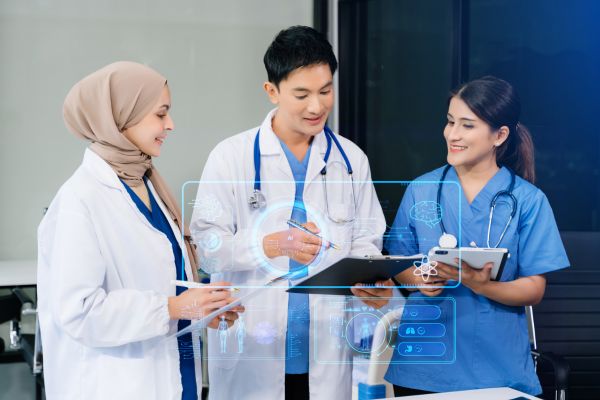
Let’s be real for a second. When most people hear the word “AI,” they think of robots, sci-fi movies, or some mysterious technology that feels far removed from everyday life. But the thing is, AI is already quietly working behind the scenes in places that matter most. One of the biggest? Healthcare. More specifically, AI in medical diagnosis is changing how diseases are detected, understood, and treated — often faster and more accurately than ever before.
This isn’t some distant future idea either. It’s happening right now, in hospitals, clinics, and research labs across the world. And honestly, it’s saving lives in ways that weren’t possible just a decade ago.
Understanding AI in Medical Diagnosis in Simple Terms
Before we dive deeper, let’s clear something up. AI in medical diagnosis doesn’t mean machines replacing doctors. That fear comes up a lot, you know. In reality, AI is more like an extremely smart assistant that helps doctors make better decisions.
Artificial intelligence works by analyzing massive amounts of medical data. We’re talking about X-rays, MRI scans, blood test results, patient histories, genetic information, and more. A human doctor can review a lot, sure, but AI can process millions of data points in seconds. That speed and pattern recognition ability is where the real magic happens.
Instead of guessing or relying only on past experience, doctors can now use AI-powered tools to spot early signs of disease, confirm diagnoses, and reduce the chance of human error. It’s not about replacing expertise. It’s about enhancing it.
Why Medical Diagnosis Needed a Smarter Approach
Traditional medical diagnosis has always relied heavily on experience, observation, and testing. And to be fair, it has worked pretty well for decades. But it also has limits. Fatigue, time pressure, and information overload can affect even the best physicians.
The thing is, modern medicine produces more data than any single human can reasonably analyze. Imaging scans alone generate thousands of images for one patient. Add lab reports, symptoms, family history, and lifestyle factors, and it becomes overwhelming fast.
This is exactly where AI in medical diagnosis steps in. AI systems don’t get tired. They don’t rush. They don’t overlook tiny details because it’s the end of a long shift. They simply analyze patterns, compare data, and flag anything that looks off.
How AI Is Detecting Diseases Earlier Than Ever
Early detection can be the difference between life and death. Cancer is a perfect example. Catch it early, and survival rates skyrocket. Catch it late, and options become limited.
AI in medical diagnosis has shown incredible results in identifying early signs of cancer, especially in imaging. AI models can detect tumors in mammograms, CT scans, and MRIs that are so small they’re nearly invisible to the human eye. Sometimes, these systems spot abnormalities years before symptoms even appear.
The same applies to heart disease. AI can analyze ECG data and imaging scans to predict heart attacks or strokes long before they happen. That kind of foresight gives doctors and patients valuable time to act.
And yes, this stuff sounds almost unbelievable. But it’s already being used in real clinical settings.
AI and Medical Imaging: A Game Changer
Medical imaging is one of the strongest areas where AI in medical diagnosis shines. Radiology, in particular, has benefited massively.
AI algorithms can scan X-rays, ultrasounds, MRIs, and CT scans with incredible accuracy. They can highlight suspicious areas, compare them against millions of similar cases, and suggest possible diagnoses in seconds.
This doesn’t mean radiologists are out of a job. Not even close. Instead, AI helps them work faster and more confidently. Doctors can focus on complex cases and patient care, while AI handles the heavy lifting of initial image analysis.
In busy hospitals, this efficiency can reduce waiting times and speed up treatment decisions. And when time matters, speed saves lives.
Personalized Diagnosis Through AI
One of the most exciting aspects of AI in medical diagnosis is personalization. No two patients are exactly alike, yet traditional medicine often relies on generalized treatment guidelines.
AI changes that by analyzing individual patient data. Genetic information, lifestyle habits, previous conditions, and even wearable device data can all be used to create a clearer picture of a person’s health.
For example, AI can help predict how a specific patient might respond to a particular treatment. It can also identify risks that might not apply to the general population but are critical for that individual. This shift toward personalized diagnosis and care is huge, and it’s still just getting started.
Reducing Diagnostic Errors and Bias
Let’s talk about something uncomfortable but important. Diagnostic errors happen. Misdiagnosis is more common than people realize, and it can lead to delayed treatment or unnecessary procedures.
AI in medical diagnosis helps reduce these errors by offering a second layer of analysis. AI systems don’t rely on assumptions or unconscious bias. They evaluate data objectively and consistently.
That said, AI isn’t perfect. It learns from data, and if the data is flawed, results can be too. This is why human oversight remains essential. When doctors and AI work together, the result is often more accurate and fair diagnoses.
AI in Medical Diagnosis for Global Healthcare Access
Here’s a side of AI that doesn’t get enough attention. In many parts of the world, access to skilled doctors and specialists is limited. Rural areas and developing regions often struggle with shortages of medical professionals.
AI-powered diagnostic tools can help bridge that gap. With basic equipment and internet access, healthcare workers can use AI systems to analyze scans, symptoms, and test results. This support can guide them toward better decisions when specialists aren’t available.
In these settings, AI in medical diagnosis isn’t just convenient. It’s transformative. It brings quality healthcare closer to people who have historically been left behind.
The Human Side of AI in Healthcare
Now, let’s slow down for a moment. Technology is impressive, but healthcare is deeply human. People want empathy, reassurance, and trust. No algorithm can replace that.
The best use of AI in medical diagnosis respects this balance. AI handles data. Doctors handle people. When used thoughtfully, AI frees up time for physicians to actually talk to patients, explain conditions, and provide emotional support.
Ironically, by introducing advanced technology, healthcare can become more human again.
Challenges and Ethical Considerations
Of course, it’s not all smooth sailing. AI in medical diagnosis raises serious ethical questions. Data privacy is a big one. Medical data is sensitive, and protecting it is non-negotiable.
There’s also the issue of transparency. Some AI models operate like black boxes, making decisions without clear explanations. In medicine, that’s a problem. Doctors need to understand why a diagnosis is suggested, not just accept it blindly.
Regulation, training, and responsible development are crucial. AI should support medical professionals, not override them. Getting this balance right is an ongoing process.
The Future of AI in Medical Diagnosis
Looking ahead, AI in medical diagnosis is only going to get smarter. As more data becomes available and algorithms improve, diagnostic accuracy will continue to rise.
We’ll likely see AI integrated into routine checkups, wearable devices that detect illness early, and real-time monitoring systems that alert doctors before problems escalate. The future isn’t about dramatic robot doctors. It’s about quiet, intelligent systems working alongside humans.
And honestly, that future feels pretty hopeful.
Final Thoughts on AI in Medical Diagnosis
So, where does all this leave us? AI in medical diagnosis isn’t hype. It’s not a buzzword. It’s a powerful tool that’s already making healthcare faster, smarter, and more accessible.
When used responsibly, AI enhances human judgment rather than replacing it. It helps doctors catch diseases earlier, reduce errors, personalize care, and reach patients who need help the most.
The real takeaway is this: AI doesn’t save lives on its own. People do. But when people are supported by intelligent technology, incredible things can happen. And in healthcare, those incredible things often mean more time, better outcomes, and lives saved.
That’s something worth paying attention to.